Last updated November 23, 2026
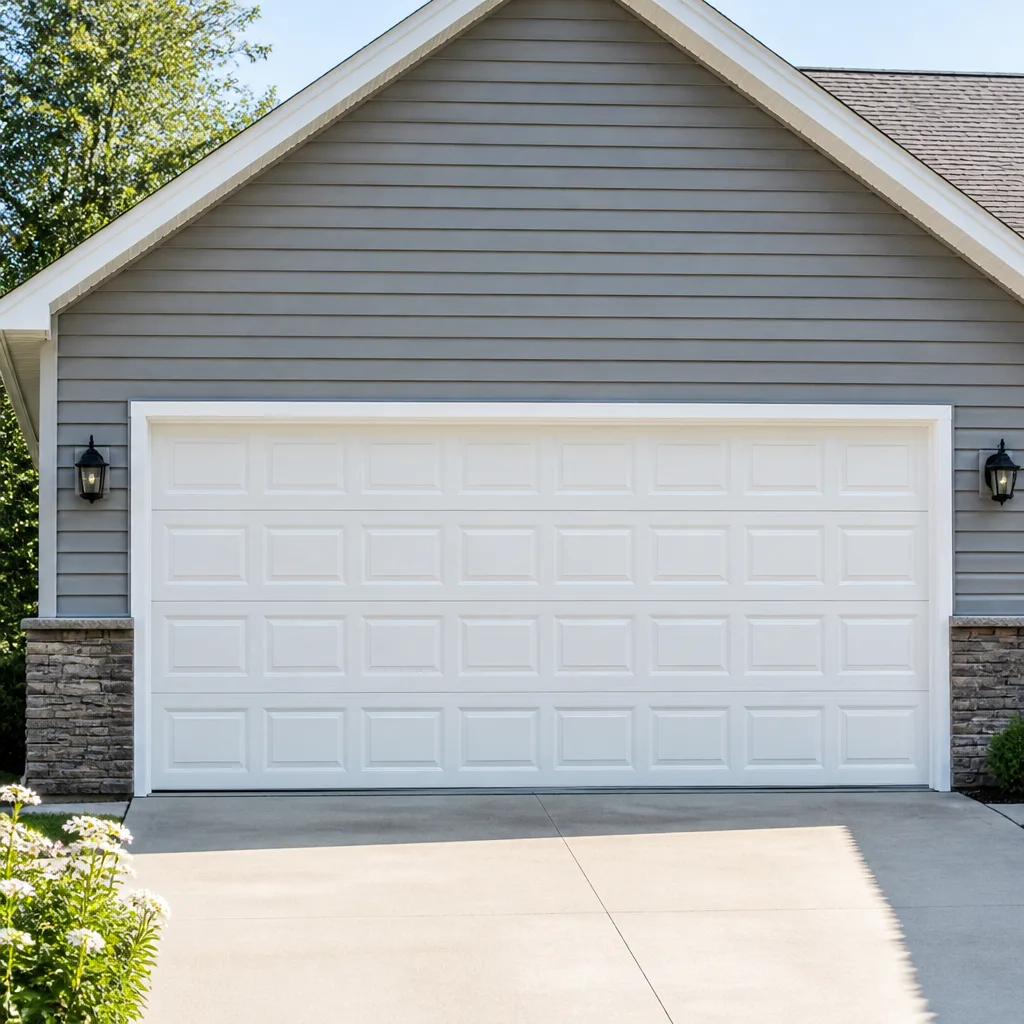 Raised-panel steel
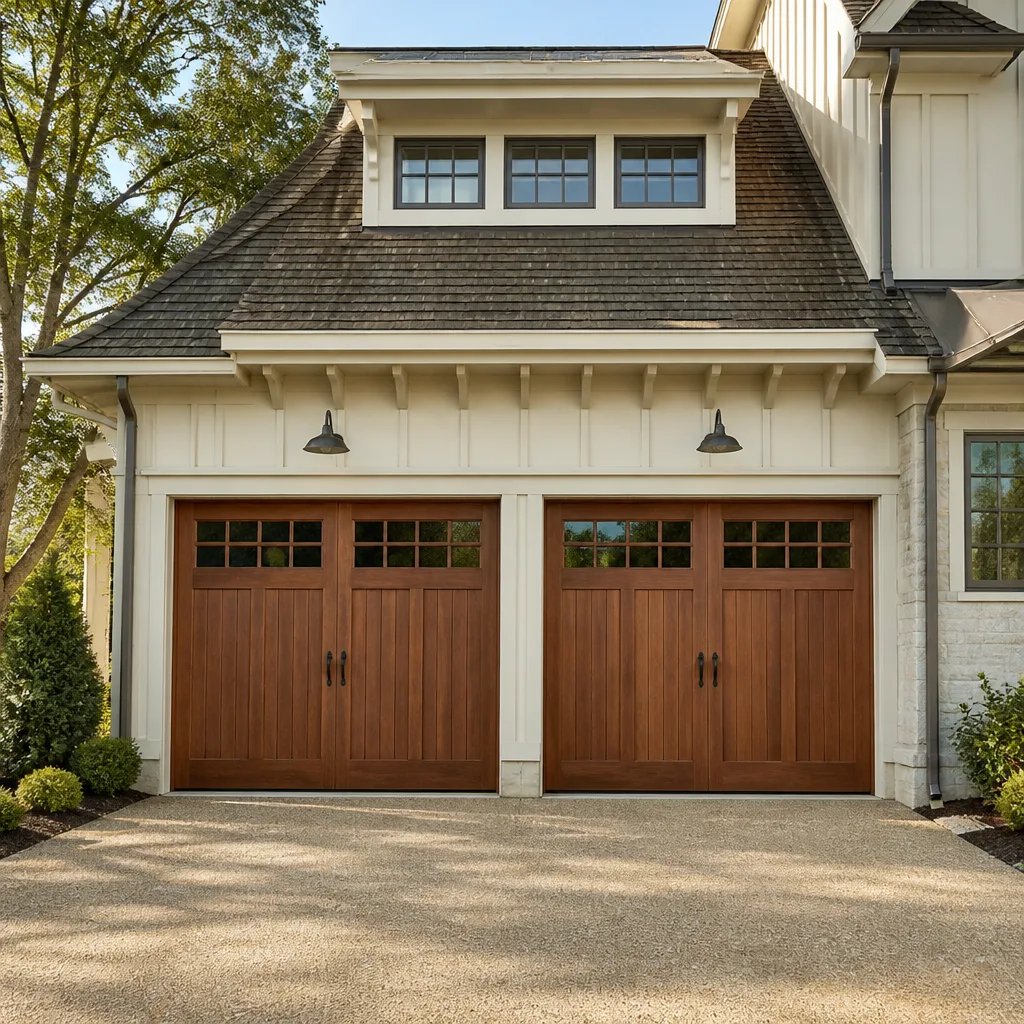 Carriage house
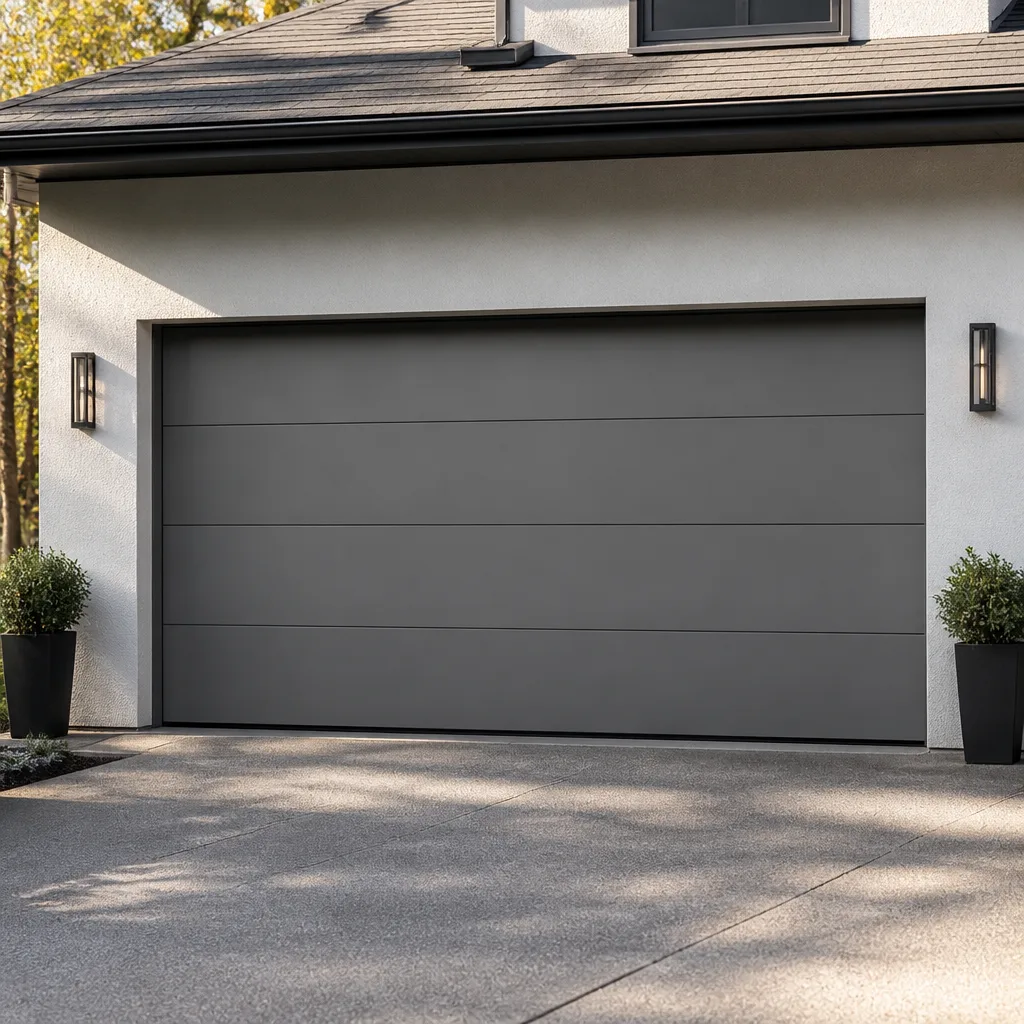 Modern flush
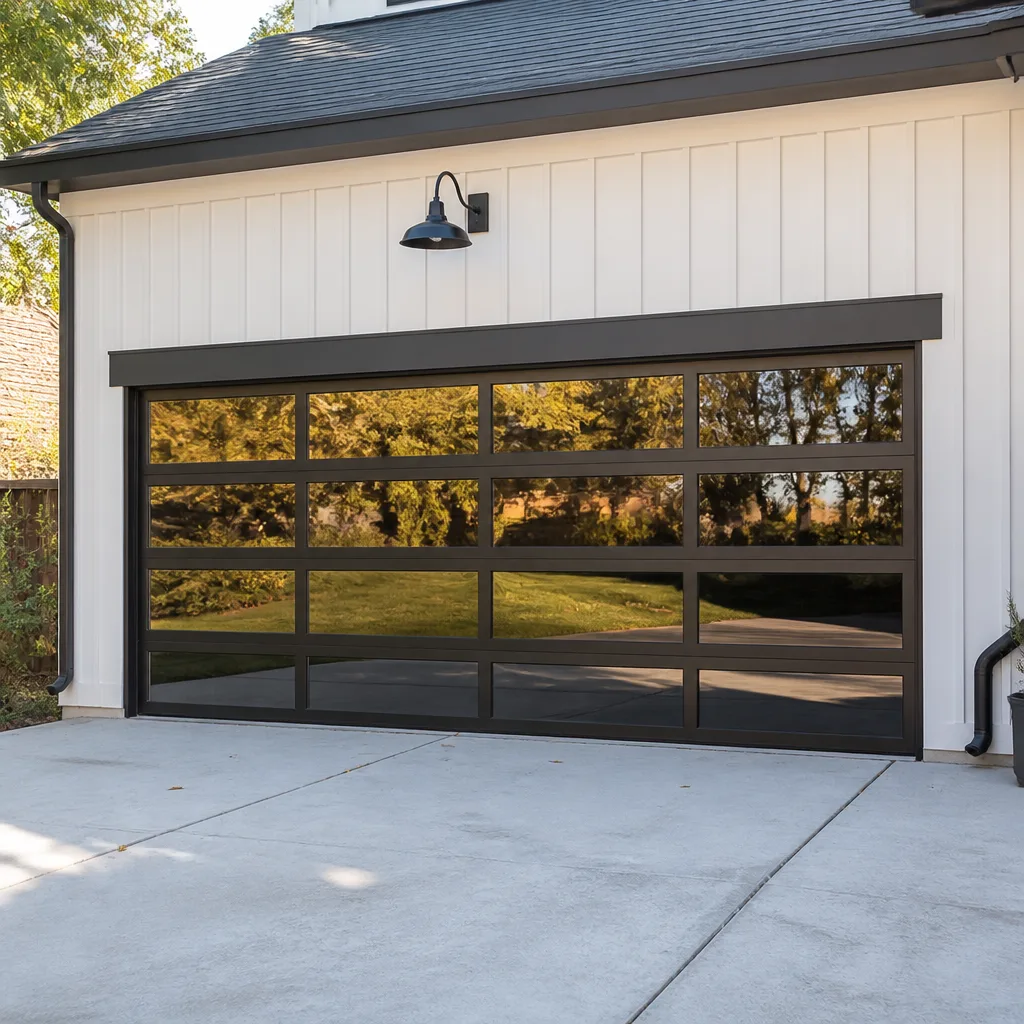 Full-view glass
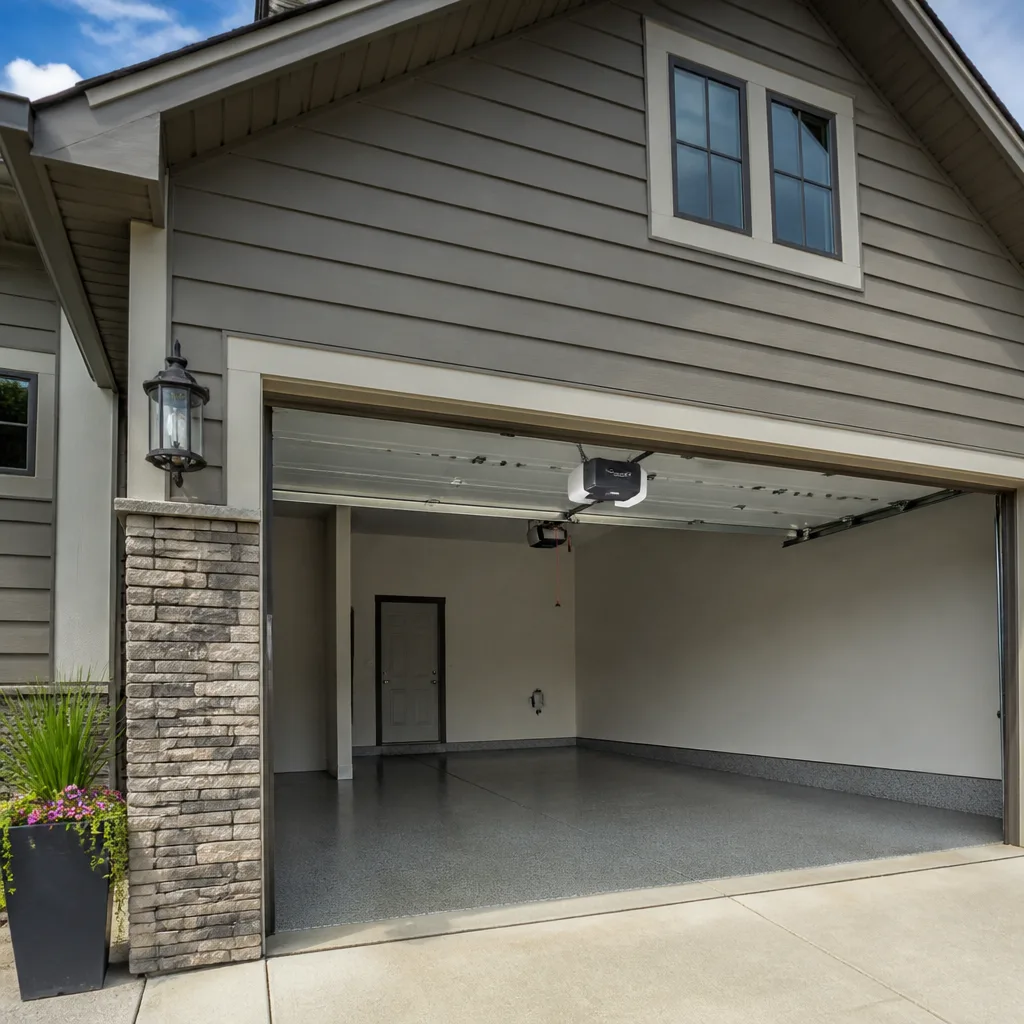 LiftMaster openers
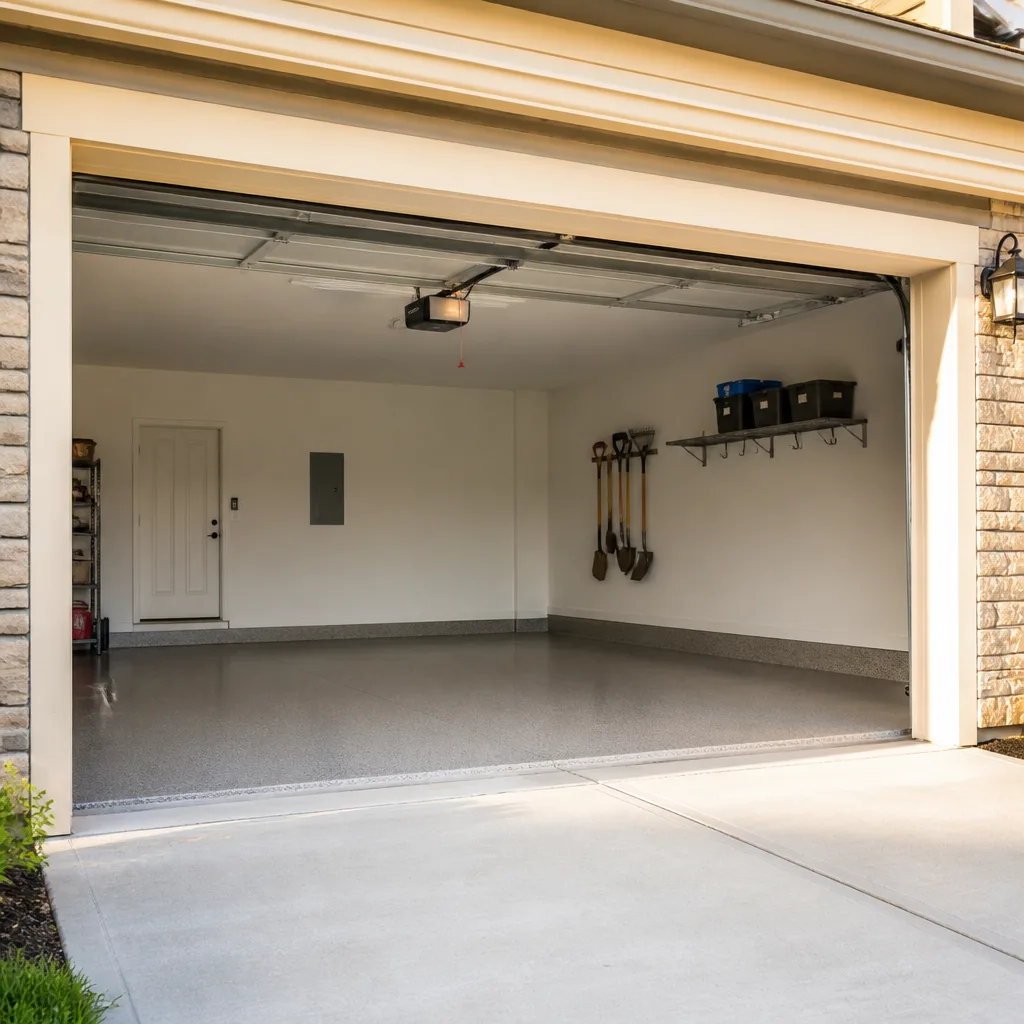 Chamberlain openers
Full 25-point door and opener safety check with every visit - springs, cables, rollers, tracks, and your LiftMaster or Chamberlain opener included
You get a price before we start. It does not change when the pro arrives.
Get your free estimateGarage Door Repair Troubleshooting in Winter Haven: Common Problems and How to Fix Them
A noisy garage door isn’t a noise problem. It’s a lubrication or hardware alignment problem that’s been running for months, and by the time it’s loud enough to bother you, something has already worn. The same logic applies to almost every garage door complaint we hear: the symptom the homeowner notices is rarely the part that failed. A door that reverses halfway down usually isn’t a sensor problem. A door that opens crooked usually isn’t a track problem. In this guide we’ll teach you to read a failing door from the mechanical chain backward, so you stop replacing parts that were never the issue. You’ll learn the visual checks that tell a spring failure from a cable failure from an opener failure, the safe line between homeowner maintenance and technician work, and why Winter Haven’s humidity makes door hardware age differently than the national advice suggests.
Quick Answer
Most garage door problems in Winter Haven come down to four root causes: worn or broken torsion springs, cable failure, track misalignment from humidity-driven corrosion, and opener logic or force-setting faults. You can identify which one you’re facing with a visual inspection and no tools by watching how the door moves, where it stops, and whether the opener motor runs while the door stays still. Anything involving springs or cables is technician work; lubrication, sensor alignment, and track wiping are safe for homeowners.
Styles & brands we work with
- Raised-panel steel
- Carriage house
- Modern flush
- Full-view glass
- LiftMaster openers
- Chamberlain openers
Table of Contents
- Why You Should Diagnose From the Mechanical Chain Backward
- How Winter Haven Humidity Changes Garage Door Wear
- Spring, Cable, or Opener? A No-Tools Visual Test
- The Symptom-to-Cause Matrix
- Why “It Works Sometimes” Is More Dangerous Than “It Won’t Work”
- The Safe vs. Unsafe DIY Line
- A Maintenance Routine That Actually Prevents Breakdowns
- Brand-Specific Diagnosis: Why It Matters
Why You Should Diagnose From the Mechanical Chain Backward
A garage door is a chain of force transfer. The opener motor turns a drive system, the drive system turns a torsion shaft or pulls a belt, the springs counterbalance the door’s weight, and the cables hold the door’s corners level as it travels. Every part depends on the one before it. When something goes wrong, the failure appears at the weakest link, but the cause often sits further up the chain.
A reversed door is the clearest example. Homeowners see the door go back up and assume the safety sensors are bad. Sometimes they are. But a door that reverses after traveling a foot or two is more often telling you the opener’s force setting is doing its job: it felt resistance, interpreted it as an obstruction, and reversed for safety. The real problem is the resistance, not the sensor. That resistance might be a dragging track, a dry roller, or a spring that’s lost tension and left the opener lifting more weight than it should.
This is the mindset shift that saves money. Ask what the symptom implies about force, not which part is easiest to replace. Three questions narrow almost any failure down:
- Does the opener motor run? If the motor hums or turns but the door doesn’t move, the problem is downstream of the motor: the drive system, the springs, or a broken cable.
- Does the door move freely by hand with the opener disengaged? A door that’s heavy or stuck by hand points to a mechanical problem, not an opener problem.
- Does the door travel level? One side lagging the other almost always means a cable or spring issue on that side, not a bent track.
That third question matters most in Winter Haven, where the humidity does quiet, gradual damage to exactly the parts that keep travel level.
How Winter Haven Humidity Changes Garage Door Wear
Central Florida’s humidity is the single biggest factor in how garage door hardware ages here, and it’s the reason national maintenance advice doesn’t map cleanly onto a Winter Haven door. The advice you read online is written for average conditions. Winter Haven runs warm and humid for most of the year, and that changes the wear timeline on two components in particular: tracks and springs.
Tracks corrode from the inside
Steel tracks don’t rust evenly. Moisture collects in the low spots and along the edges where the rollers ride, and the corrosion works from the inside surface outward. What you notice first isn’t visible rust. It’s a door that starts to drag or scrape slightly, then gets harder to lift, then trips the opener’s force sensor. The track looked fine to the homeowner because the damage was on the rolling surface. Wiping the tracks periodically and keeping the rollers clean slows this down considerably. If you can see surface rust, the drag has usually been developing for months.
Springs fatigue faster than the national average
Torsion springs are rated in cycles, not years, and humidity doesn’t change the cycle count a spring is built for. What it does change is corrosion at the coils and the mounting points. A spring that’s pitted or slightly rusted at the coil edges is a spring with less effective metal to work with, and it’s more likely to fail before its rated cycles. That’s not a reason to panic. It is a reason to look at the coils, not just listen for the noise, and to mention any visible corrosion when you call. What a Winter Haven homeowner sees under the ceiling can genuinely save time on the phone.
The good news about mild winters
Every winter you avoid the thermal cycling that fails door hardware up north. You’re not fighting freeze-thaw on tracks or ice buildup on weather seals. That means when a Winter Haven door fails, the cause is far more likely to be humidity, wear, or an adjustment that drifted, and far less likely to be a weather event. That makes diagnosis more predictable, which is genuinely useful when you’re deciding whether to call.
Spring, Cable, or Opener? A No-Tools Visual Test
You can tell the three most common failures apart with your eyes alone. These are observations, not repairs. Spring and cable work is dangerous and belongs to a trained technician. What you’re doing here is finding out what to say when you call.
Step 1: Look at the springs (do not touch them)
Stand back and look at the torsion springs mounted on the shaft above the door, or the extension springs running alongside the tracks if your door uses that style. A spring with a visible gap in the coil has snapped. A torsion spring that looks intact but has lost tension is harder to see, but it often shows corrosion or a slight separation at the coil ends. Never reach up to test a spring by hand. Never try to wind, unwind, or force one back into place. Torsion springs are under extreme tension and the wrong movement can cause serious injury.
Step 2: Look at the cables
The cables run from the bottom corners of the door up to the drums or pulleys. Scan them for fraying, kinks, or a cable hanging loose off its drum. A snapped cable is usually visible as a slack strand. If you find one, stop what you’re doing and keep people and vehicles out from under the door. A door with a failed cable can drop.
Step 3: Test the opener without the door
With the opener disengaged from the door using the manual release cord, run the opener by itself. If the motor turns and the carriage moves along the rail, the opener is fine and the problem is in the door’s mechanical system. If the motor hums, clicks, or does nothing, the opener is part of the problem. That tells you whether you’re looking at a garage door opener repair or a mechanical repair.
Step 4: Balance the door by hand
With the opener still disengaged, lift the door about halfway by hand and let go gently. A healthy door should hold roughly in place or drift slowly. A door that drops hard or feels very heavy is telling you the springs aren’t carrying their share of the weight. A door that’s hard to lift is telling you the springs have weakened or a track is binding. Either way, don’t keep working it. Tell the technician what happened. For a hands-on explanation of the spring side, see garage door spring repair.
The Symptom-to-Cause Matrix
Match your symptom to the most probable cause. This matrix is where most Winter Haven troubleshooting calls end up, and it’s the fastest way to know what kind of repair you’re facing.
Door won’t open at all
Most probable cause: broken spring or snapped cable. If the opener runs but the door stays put, the springs aren’t counterbalancing the door’s weight. If the opener won’t even move, check the power and the wall control first, then look for a spring gap. In a humid climate, check for cable corrosion at the bottom corners too.
Door reverses before closing
Most probable cause: misaligned safety sensors or excessive force resistance. Clean the sensor lenses and check that the two sensors still face each other squarely. If the sensors are fine, the opener is feeling resistance and reversing for safety. Look for a dragging track or a dry roller. A misaligned sensor is a homeowner fix; a force-resistance reversal usually points to a mechanical problem.
Door opens crooked
Most probable cause: a cable problem or a spring that’s lost tension on one side. A door that opens unevenly is a door you stop using until it’s seen. Crooked travel puts lateral stress on the tracks and the opener, and in a Winter Haven door with any track corrosion it can escalate fast. This is a call-a-technician symptom, not a wait-and-see one.
Opener runs but the door doesn’t move
Most probable cause: the opener is disconnected from the door, or the drive system has failed. Check the manual release first. If the door is engaged and the opener still runs without moving it, the issue is in the drive system, the carriage, or the door’s mechanical load. Look at the door’s springs and cables before you assume the opener.
Door is noisy
Most probable cause: dry or worn rollers, or a track that’s out of alignment. Noise is a lubrication and alignment symptom 90% of the time. It’s also the cheapest thing on this list to address, so it’s a good reason to at least look.
Door won’t stay down, or springs back up
Most probable cause: opener travel limits set wrong, or a safety sensor activation. This one is often a simple setting. If it started suddenly after nothing changed, the sensors are the first thing to clean.
Why “It Works Sometimes” Is More Dangerous Than “It Won’t Work”
A door that fails completely is annoying. A door that works nine times out of ten is a hazard, and it’s the failure pattern that gets ignored the longest. We hear “it works sometimes” constantly, and in our experience it’s the signal of an imminent complete failure more often than a stable partial one.
Intermittent behavior means the system is on the edge of a threshold. A torsion spring with a fracture that hasn’t separated yet will hold, then shift, then hold again. A cable beginning to fray at one strand is still functioning, but every cycle loads the remaining strands. An opener with a failing capacitor or a worn gear will sometimes complete a cycle and sometimes stall. None of these are stable states. Each one is a system drifting toward a full failure, and the full failure is more likely to happen while the door is moving, with you or your car underneath it.
What intermittent failure patterns actually signal
- Works on some days, not others: thermal or humidity-dependent hardware change, most often a spring that’s lost tension or a track expanding and binding.
- Works from the remote but not the wall control (or the reverse): a control or wiring fault, usually not the door itself.
- Works the first time, fails on the second or third cycle: a motor, capacitor, or drive system component that’s overheating or losing torque, which is the classic early sign of opener failure.
- Works when you lift it by hand, not with the opener: the door’s weight has exceeded the opener’s capacity, usually due to spring fatigue.
- Works when it’s cooler, fails when it’s hot: thermal expansion binding a track, common in a Winter Haven summer.
If your door matches any of these patterns, don’t schedule it as a low-priority item. Treat intermittent behavior as an early warning that the next failure will be the real one, and get an estimate before it becomes an emergency.
The Safe vs. Unsafe DIY Line
There’s a clear line between what a homeowner can legitimately do and what belongs to a trained technician, and it’s not a gray area. The line exists because some garage door components store enough energy to seriously hurt someone who mishandles them.
Safe homeowner work
- Wiping down and lubricating the tracks (a light application, not a soak)
- Lubricating rollers, hinges, and the torsion shaft bearings (with the door closed and the opener disengaged)
- Cleaning the safety sensor lenses and checking sensor alignment
- Visual inspection of springs, cables, and hardware
- Replacing the opener’s light bulbs or remote batteries
- Adjusting the opener’s force and travel limits if the manual covers it and you’re comfortable with the process
- Tightening visible bolts and hinge screws on the door face
Unsafe homeowner work
- Winding or unwinding any torsion spring
- Removing or reinstalling torsion or extension springs
- Replacing or restringing cables
- Removing the bottom bracket or the drums at the top of the door
- Any work on a door with a snapped spring or a slack cable present
- Lifting or forcing a door that has lost tension
The spring and cable side of the list is technician-only because the stored energy is not intuitive. A torsion spring under load can cause serious injury from a single wrong movement, and it doesn’t give a second chance. This is the reason garage door repair in this trade is split between “call us” and “wait for us”: the spring and cable work is where expertise isn’t optional. If you’re unsure which side of the line your job sits on, the safe answer is to call.
A Maintenance Routine That Actually Prevents Breakdowns
The most common Winter Haven garage door failures are preventable, and prevention costs a fraction of what emergency repair does. A brief routine a few times a year is enough to catch most problems before they strand you.
- Lubricate the moving parts. Apply a garage-door-rated lubricant to the rollers, hinges, and spring shaft bearings. Don’t use WD-40 on the bearing surfaces; it’s a water displacer, not a long-term lubricant. Do this a few times a year in Florida.
- Wipe the tracks clean. A dry cloth along the rolling surface removes grit and the start of corrosion. Do not lubricate the tracks themselves; they’re designed to run dry.
- Listen on a quiet morning. Open and close the door when you can hear it. Any new rattle, scrape, or clunk is early information.
- Test the balance by hand. Disengage the opener, lift the door halfway, and let it go gently. It should hold or drift slowly. A door that drops is telling you the springs are losing tension.
- Check the sensors. Clean the lenses and confirm nothing is blocking the beam, including a broom handle, a recycling bin, or something knocked over in the corner.
- Look at the springs and cables with your eyes only. A gap in a spring or a frayed cable is a call to a technician, not a repair project. Mention what you saw when you call.
- Tighten visible hardware. A loose hinge or bracket causes uneven travel over time. Snug, don’t overtighten.
Set a reminder for this routine twice a year, ideally when the seasons change, and again before the holidays. Homeowners who run it consistently tend to find the winter is when they notice a difference in how the door feels. If you’d rather have it looked at by someone who does this daily, our technicians have up to 11 years of experience and can start with a free estimate on the parts that concern you.
Brand-Specific Diagnosis: Why It Matters
Garage door brands fail in characteristic ways, and knowing the brand changes what a technician looks at first. A Genie opener with a failing drive gear behaves differently from a Wayne Dalton door with a broken torsion spring, and the diagnostic path is different. That’s why we’re factory-familiar with eight major brands: LiftMaster, Chamberlain, Genie, Clopay, Amarr, Wayne Dalton, Craftsman, and Raynor.
If your opener is a Genie or a LiftMaster, the diagnostic logic shifts to the opener side: force settings, travel limits, and the drive system. If your door is a Clopay, Amarr, or Wayne Dalton, the door’s mechanical behavior in the first few inches of travel often tells you the most. With Craftsman and Raynor units, opener programming and remote compatibility come into play. We work on your brand, which means we start from what that brand typically does under stress rather than from a generic checklist. If you’re replacing an aging door entirely, knowing the brand you have now helps clarify what will actually fit and function in the same opening.
Common Mistakes to Avoid
- Replacing the opener when the springs are the problem. If the door is heavy by hand, a new opener will just struggle harder and fail sooner. The springs come first.
- Lubricating the tracks. This attracts grit and makes the door drag worse. Tracks run dry; rollers and hinges are what get lubricated.
- Forcing a door that has lost tension. If the door is heavy or stuck, forcing it loads the cables and brackets and can turn a spring repair into a full door replacement.
- Assuming the sensors are always the cause of a reversing door. In a Winter Haven door with humidity-driven track drag, a reversal often means the opener is feeling real resistance, not a blocked beam.
- Ignoring intermittent behavior. “It works sometimes” is a warning, not a personality quirk. The next failure is likely to be the complete one.
- Waiting on a crooked door. A door that opens unevenly puts lateral load on the tracks and the opener. In a humid climate, letting it drift can bend hardware that was fine a month ago.
- Letting anyone who isn’t a garage door specialist touch a spring. A generalist may be willing to try; that’s not the same as being equipped for the most dangerous part of the job. Springs, panels, and openers all fall under the same trade.
See the difference
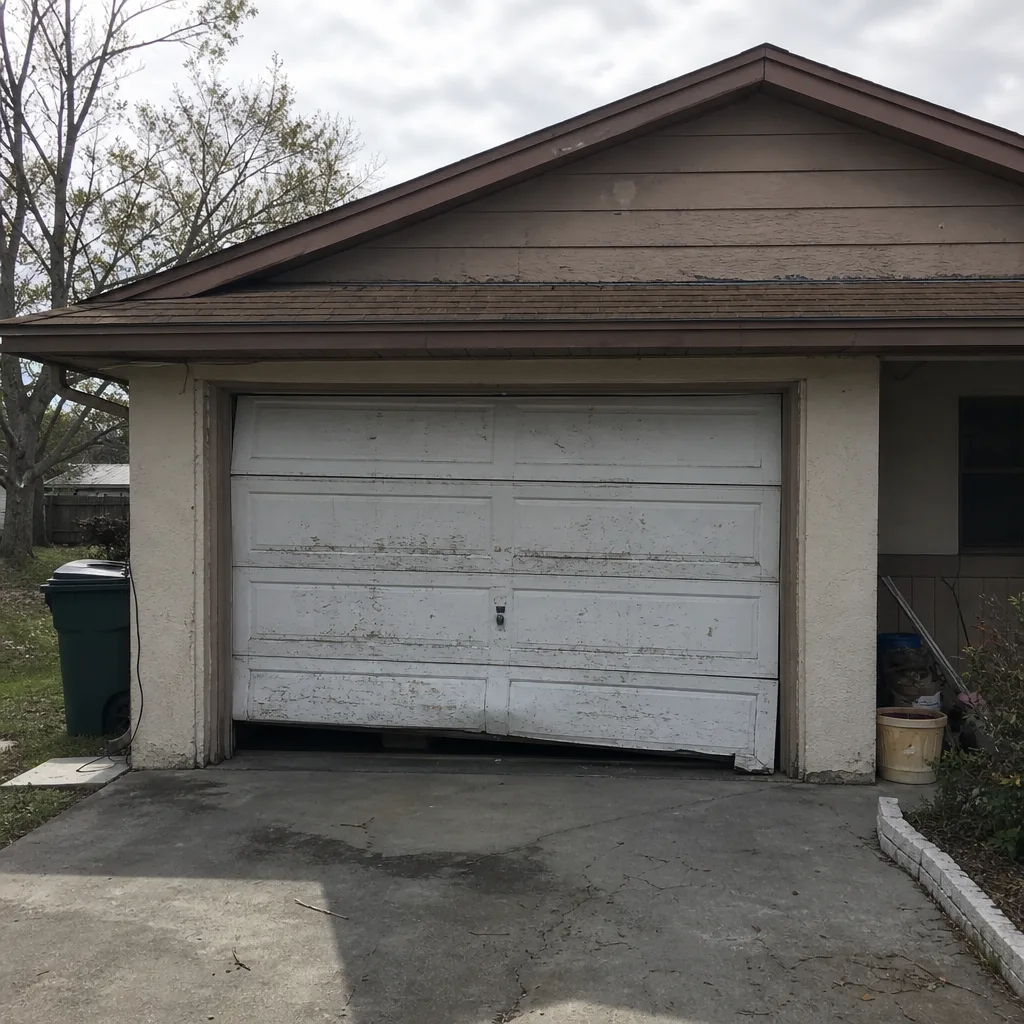 Before
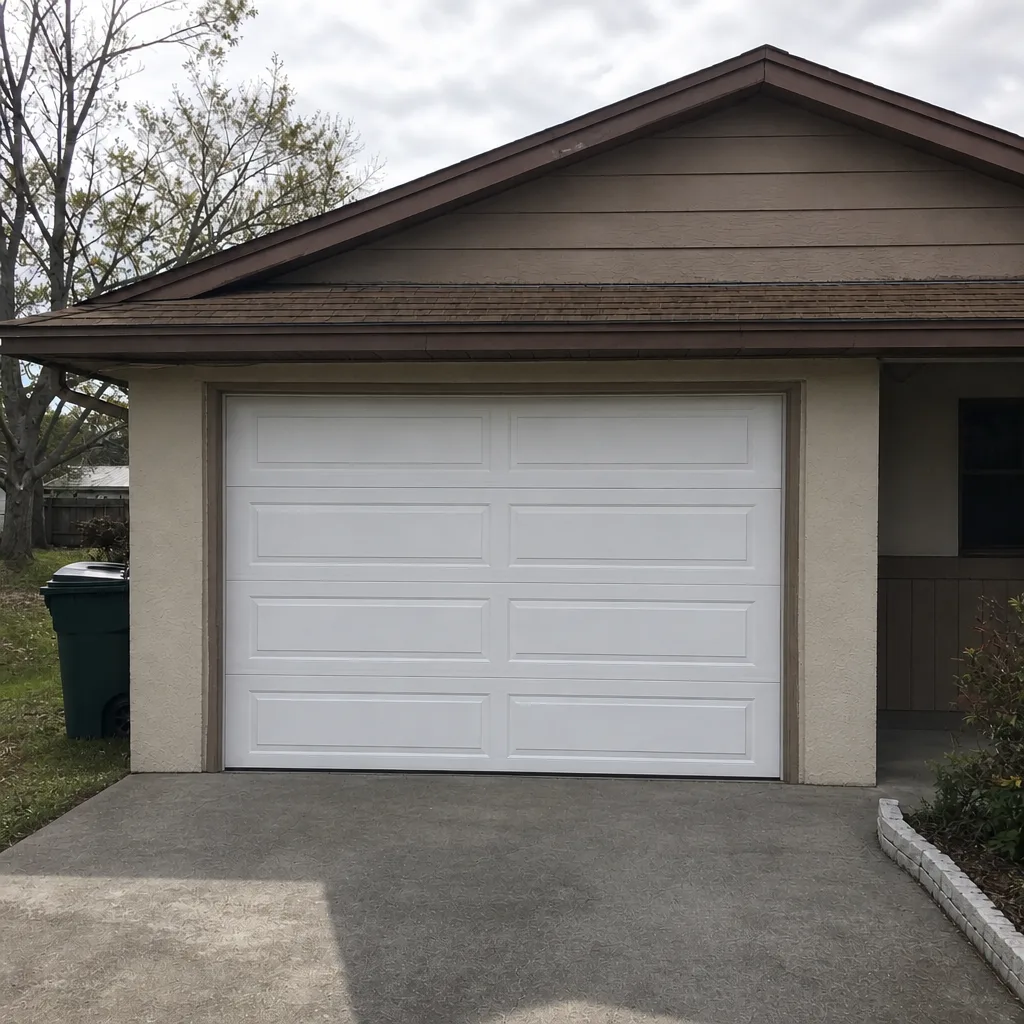 After
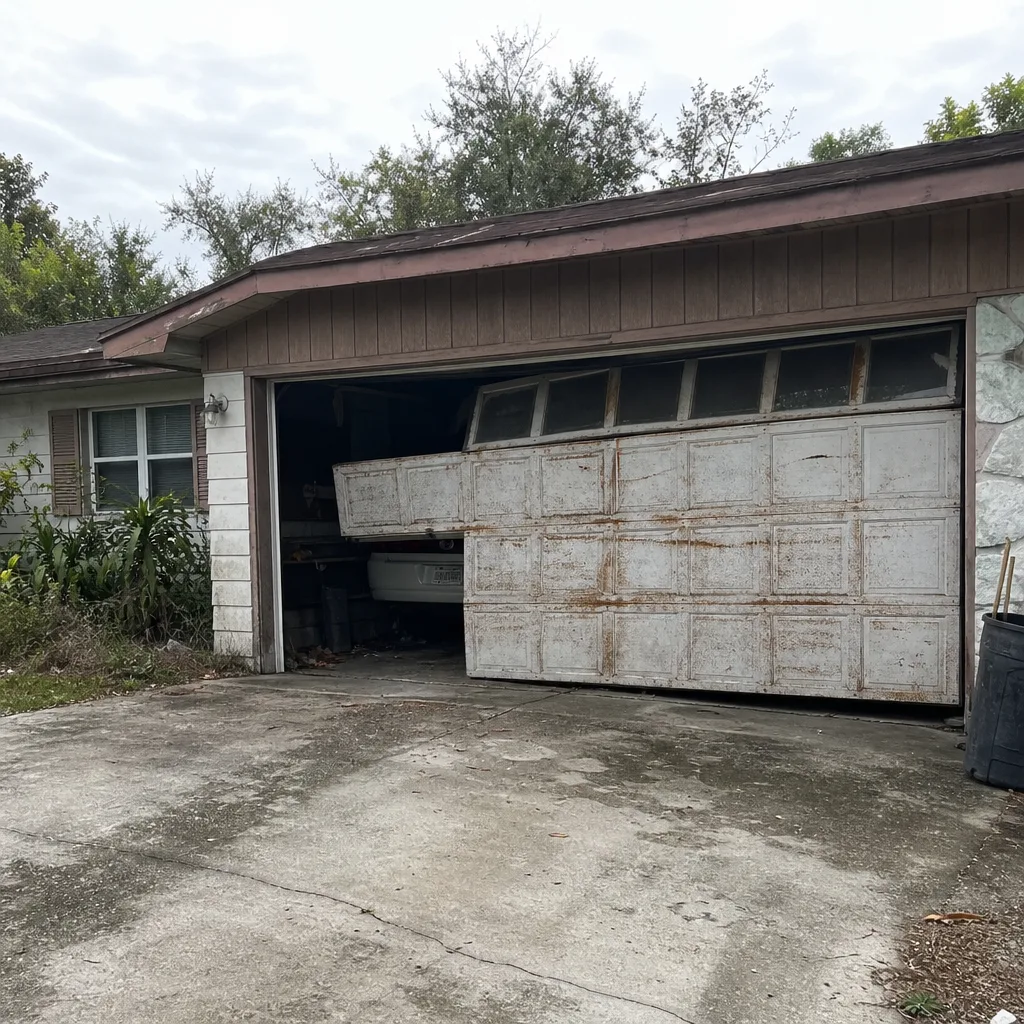 Before
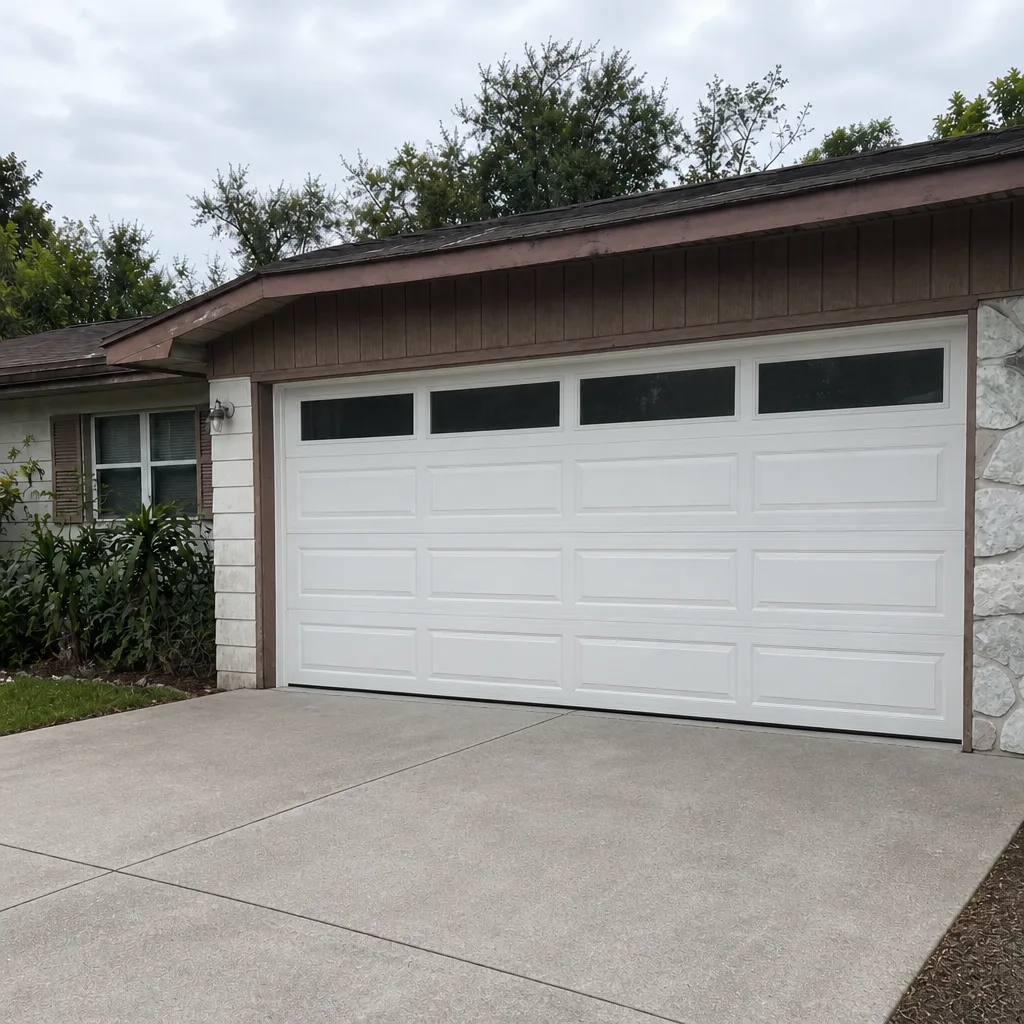 After
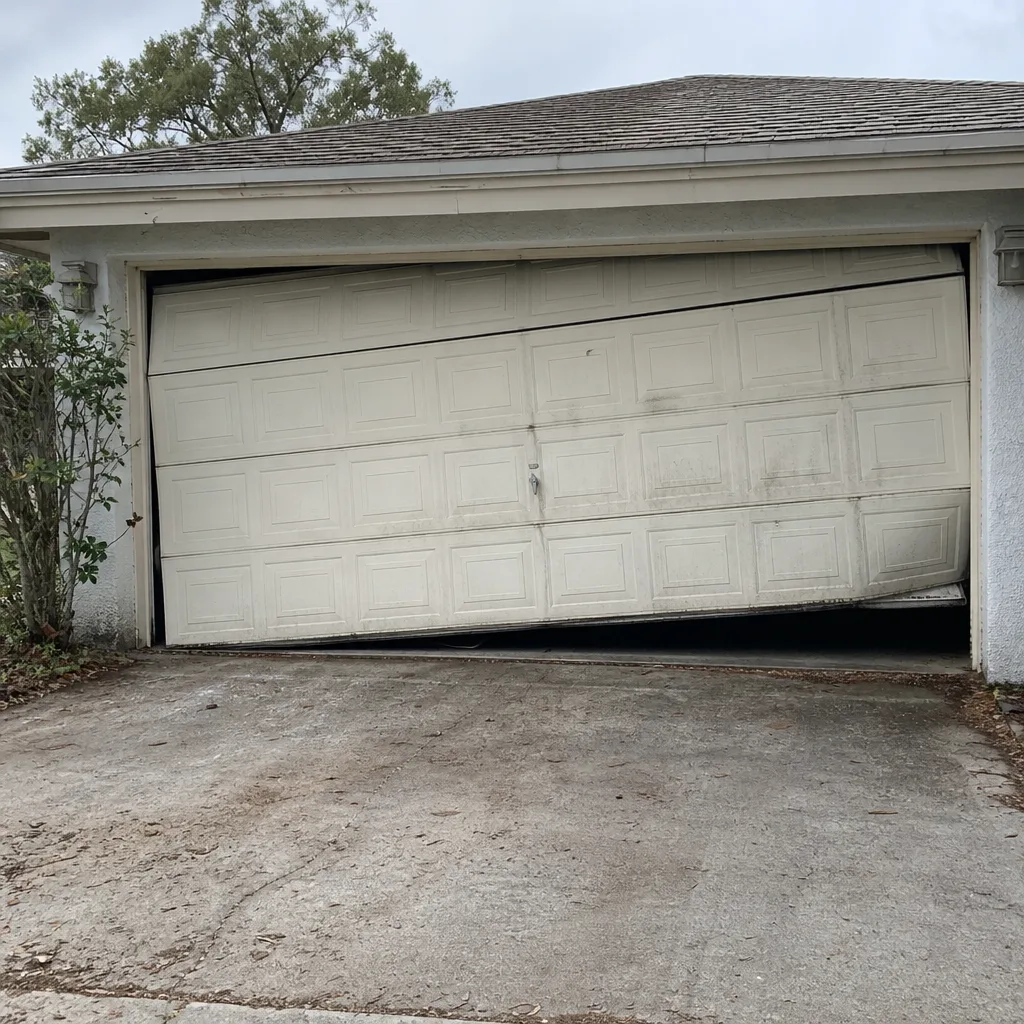 Before
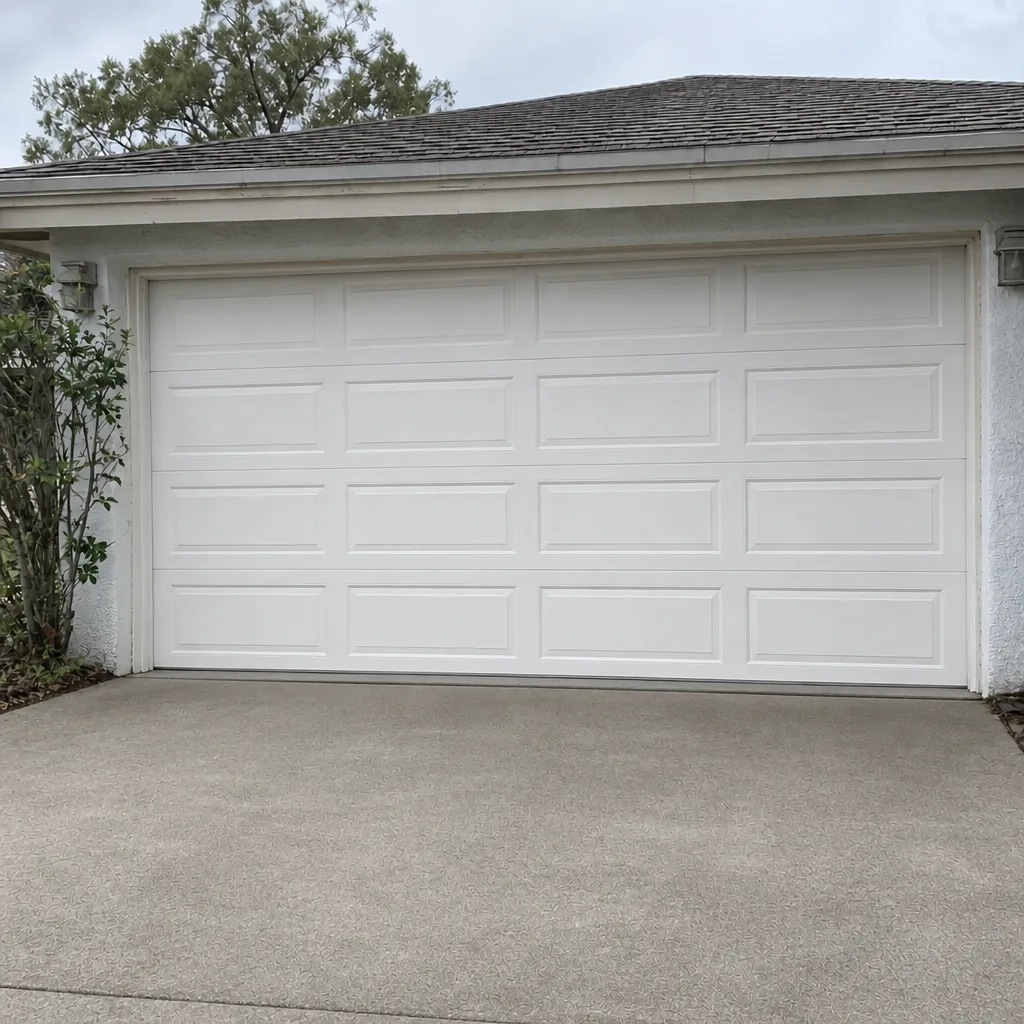 After
When to Call a Professional
Call a technician if you see a gap in a spring, a frayed or slack cable, a door that opens crooked, or a door that drops when you test it by hand. Those are the situations where the stored energy in the system makes the work genuinely dangerous. Call before anything goes wrong if your door is intermittent in any of the patterns above, or if your track shows visible rust: that’s the humidity-driven drag that turns into a force-resistance reversal. Winter Haven Garage Door Repair Pros offers free estimates in Winter Haven, and we cover springs, openers, panels, and full doors under one company, so you won’t get bounced to a second contractor mid-job. Call (877) 770-1735 to talk through what you’re seeing. If your door won’t move at all right now, our dedicated emergency garage door service exists for exactly that situation.
Frequently Asked Questions
Disengage the opener with the manual release and lift the door by hand. If it’s very heavy or won’t hold partway, the springs are the problem. If the door balances normally by hand but the opener still won’t move it, the opener is the problem. If you can see a gap in the torsion spring or a slack cable, stop and call before testing anything else. Call (877) 770-1735 for a free estimate.
A door that opens crooked almost always has a cable problem or uneven spring tension on one side. In Winter Haven, humidity-driven corrosion on the cables and drums can cause one side to fail slightly before the other. Stop using the door until it’s inspected. Crooked travel stresses the tracks and the opener and tends to escalate. Call (877) 770-1735 to schedule a free estimate.
Lubrication, sensor cleaning, and inspection are safe for homeowners. Spring and cable work is not, because the stored energy in a torsion spring can cause serious injury with even a small mistake. If your door has a snapped spring or a slack cable, do not attempt any repair and keep the area clear. Call (877) 770-1735 and we’ll walk you through what to say.
No. Intermittent failure is usually a system that’s drifting toward a complete failure, not a stable quirk. It most often signals spring fatigue, a fraying cable, or an opener losing torque as it heats up. Waiting carries more risk than getting an estimate. Call (877) 770-1735 for a free estimate and describe the pattern you’re seeing.
It depends on which part failed, and the estimate is written before any work starts. Spring and cable work costs more than a sensor or adjustment fix, and a full door replacement is a separate project entirely. We quote every job individually and you approve the price before we begin. Call (877) 770-1735 for an exact quote; estimates are free.
Yes. We’re factory-familiar with eight major brands, including Genie, Clopay, Amarr, and Wayne Dalton, along with LiftMaster, Chamberlain, Craftsman, and Raynor. That means we diagnose by what your brand typically does under stress, not by generic guesswork. Call (877) 770-1735 and tell us your brand when you schedule.
We’re closed on Saturday, but a failed door is a security and safety issue, so call us if the door won’t move or won’t stay down. We’ll book a Sunday visit or the next available day. If the door is stuck open, keep vehicles and people clear and secure the opening as best you can until we arrive. Call (877) 770-1735.
The Bottom Line
Most garage door problems in Winter Haven trace back to worn springs, failed cables, humidity-driven track corrosion, or opener faults, and the symptom you notice is rarely the part that failed. Diagnose from the mechanical chain backward: does the motor run, does the door move by hand, does it travel level? Check springs and cables with your eyes only, keep the real repairs in trained hands, and treat “it works sometimes” as the warning it is. A routine of lubrication, clean tracks, and inspection twice a year catches most failures before they happen. When you’d rather have it looked at properly, one call covers springs, openers, panels, and doors from the brands we know best.
Contact Us
If your door is doing something on this list right now, call us at (877) 770-1735 for a free estimate. We work on LiftMaster, Chamberlain, Genie, Clopay, Amarr, Wayne Dalton, Craftsman, and Raynor equipment, and every job is quoted at an agreed price before anything starts. Visit Winter Haven Garage Door Repair Pros for our full service list, or call and describe the symptom; we’ll tell you what we think is happening and what it will take to fix it. Built for garage doors. Only garage doors.
Written by the team at Winter Haven Garage Door Repair Pros.